The Old Pump House
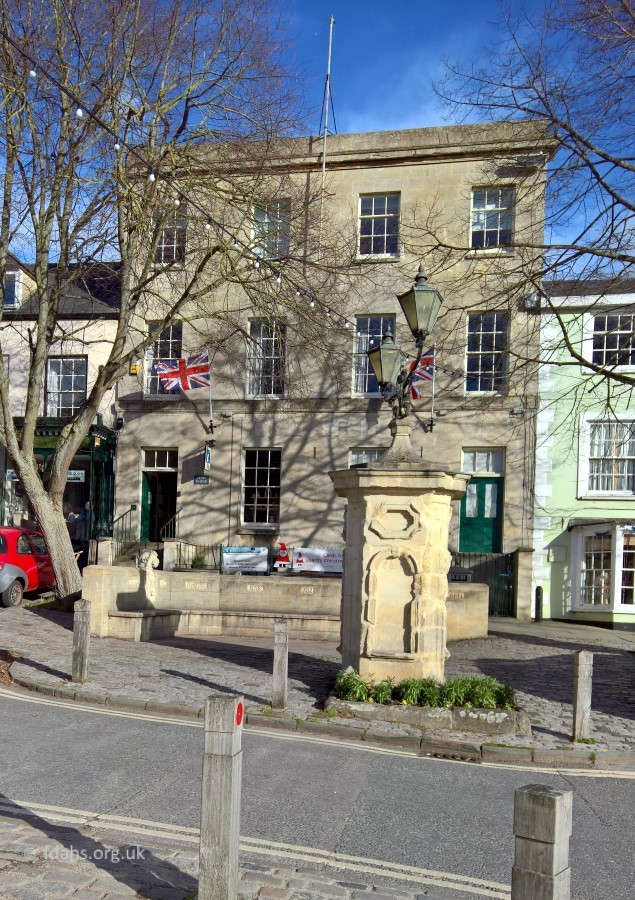 The Old Pump House is owned by Lord Faringdon (of Buscot House & Estates) and is currently leased to the town. The building itself dates back to the early 19th century and is over a natural spring.
It has seen a very wide variety of uses since its original purpose which was to replace the ‘Port Well’ in the road outside by pumping water through pipes directly into properties around the town.
The building is first recorded as being Faringdon’s first bank – County of Gloucester Bank. In the 1880’s it then became the offices of the Eagle Brewery. At the start of the First World War in 1914, Lord Faringdon’s grandmother, Lady Violet Henderson, offered the building to the Joint War Committee as an Auxiliary Red Cross Hospital. But it outgrew itself within only a few months. More…
The Old Pump House then remained as the Institute and Services Club, a club for ex-servicemen. The lease was eventually taken over by Faringdon Town Council and it became a Community Centre and Community Theatre open to all from 1978-1999.
Refurbished in 2006, it became the home of the Faringdon Town Council offices, the Tourist Information Centre, and the Faringdon Museum. The Jubilee Room on the first floor is available for hire for meetings and other activities.
The Faringdon Museum
 In 2019, Faringdon got its own museum, located in the Old Pump House. The museum is funded by Faringdon Town Council and Oxfordshire County Council. It provides a permanent display that gives a history of our fascinating town assembled and curated by Faith Carpenter. There is a complete timeline of Faringdon’s history, also cabinets displaying Faringdon fossils, Faringdon’s ancient residents, Faringdon at war and much more. In particular the museum incorporates a collection of fossils provided by the Oxfordshire Geology Trust from the unique Faringdon Sponge Gravels. There is also a presentation of the unique life and works of the eccentric Lord Berners who lived at Faringdon House. Also, a very interesting little snapshot of life in Faringdon during the First World War.
The Theatre
 Built as a “Community Theatre” at the back of the Old Pump House on Swan Lane in 1976. As part of the Community Centre it was used for various local events. Faringdon Dramatic Society produced three plays a year there from 1978-95. The use of the Pump House as a community centre collapsed in 1999 and the theatre became unused and progressively derelict. Lord Faringdon, who owns the building donated £2,000 and a charity organisation called “The Old Pump House Project” raised £19,000 to revamp the building; and renovation work started in April 2013. Access formally only through the Pump House has also been reopened at the back on Swan Lane. The Pump House Project was set up to promote the use of the building for meetings and classes and other forms of recreation and leisure time occupations.
The Port Well
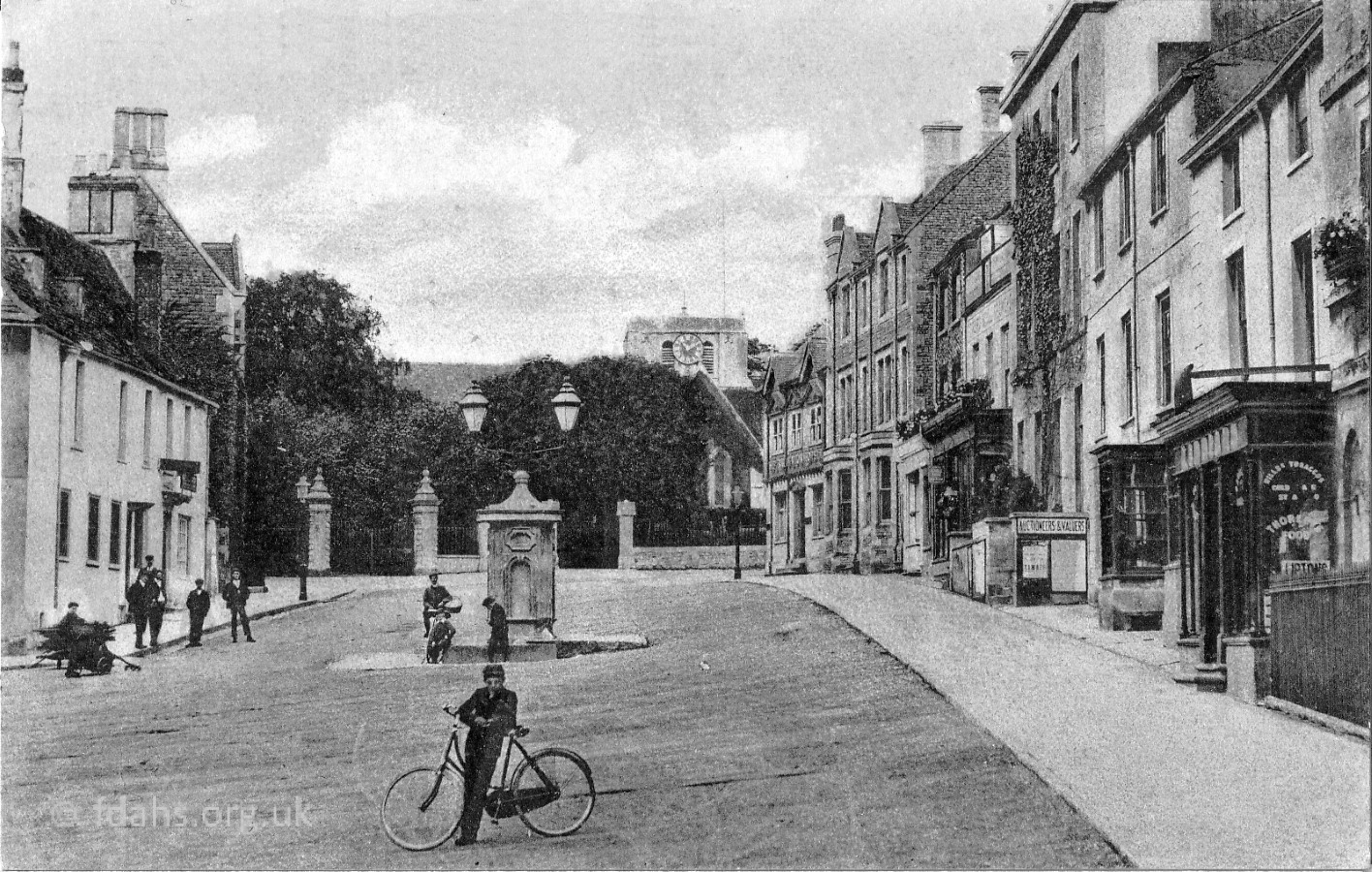
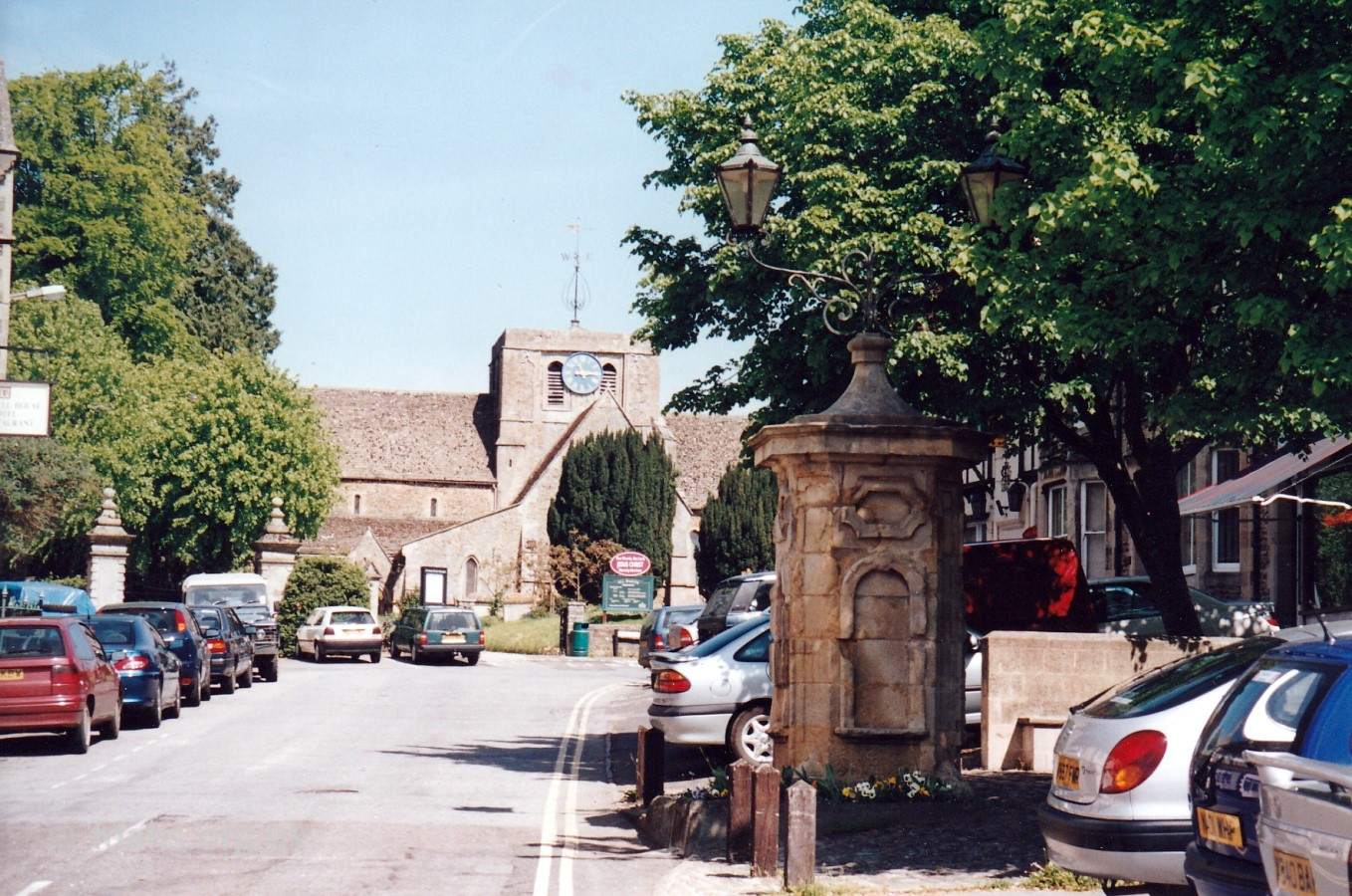
The Port Well or Portwell*, immediately outside the front of the Old Pump House once appeared very central in the Market Place (photos c1900 & c2000). No, it hasn’t been moved! The older photo was taken from further back and the right hand side is now filled with cars. The Portwell was given to the town by Sir Henry Unton, Lord of the Manor during the 1590s when he had the original Faringdon House built behind the church. Water was hand-pumped from the spring, which still rises in the cellar of the Pump House that was built over 200 years later. It was then the town’s only piped water supply, but you had to go and pump it up yourself and carry it home.
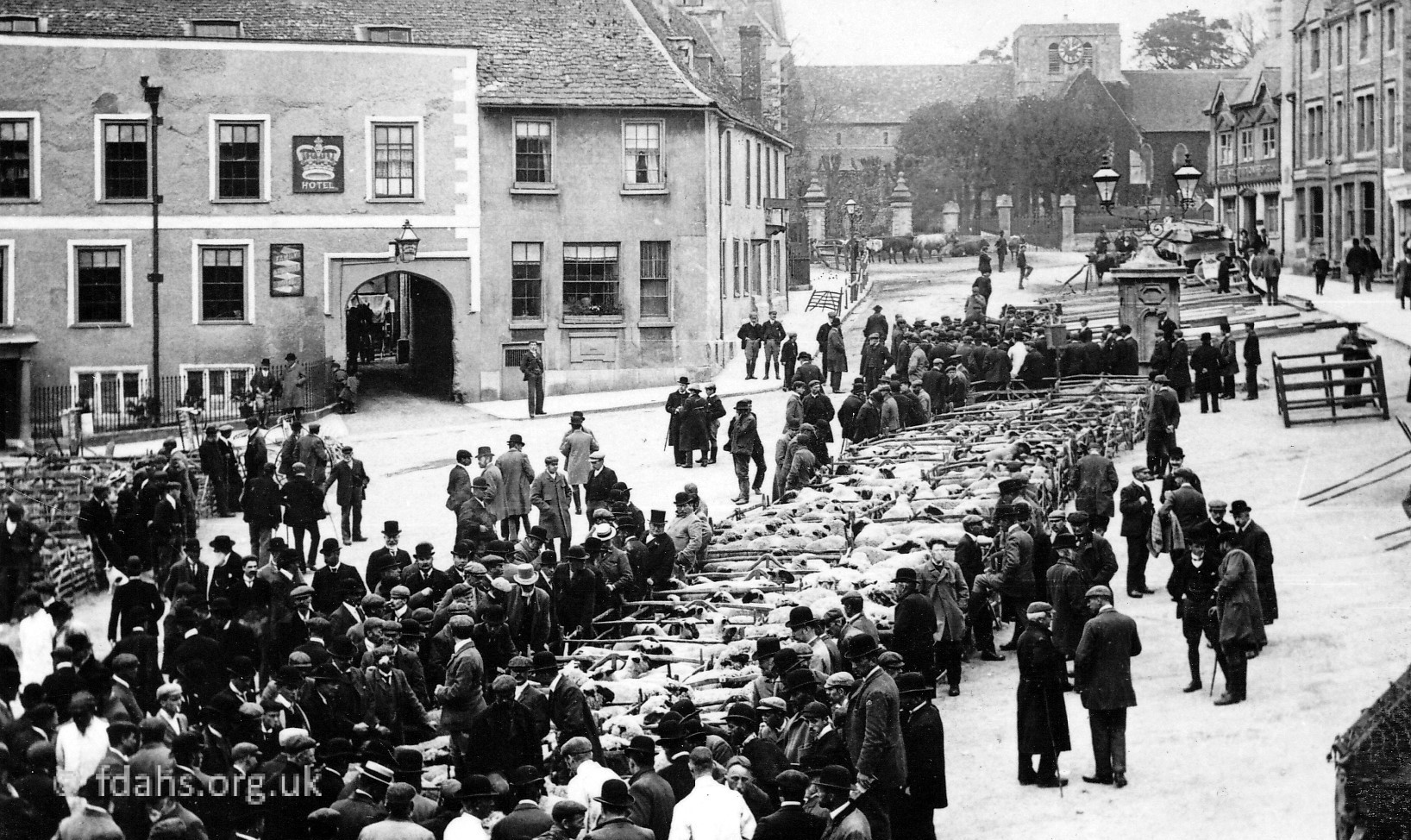
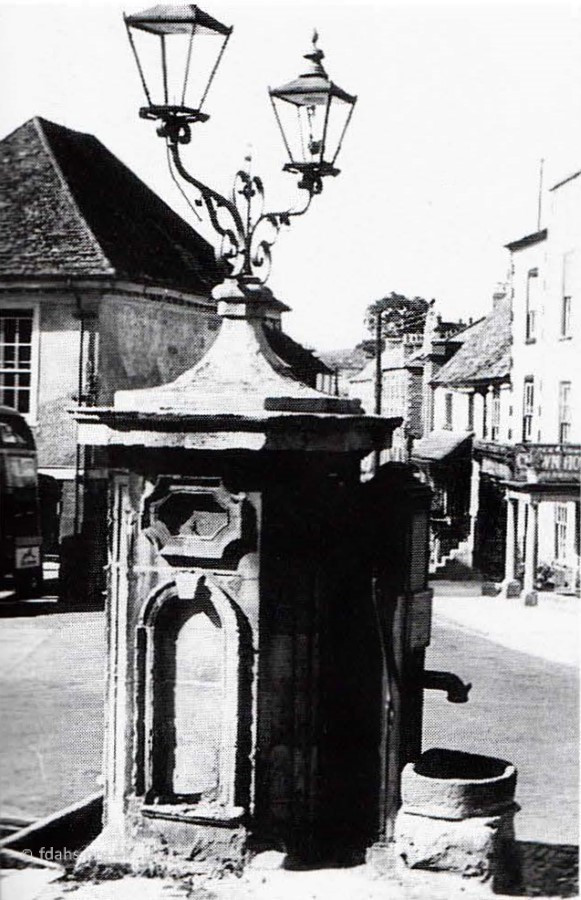 Two gas lamps were placed on top in the 19th century, which were later converted to electricity probably around the 1950/60s when the other street lighting was converted. On one side there was a hand pump with a heavy lead drinking cup securely chained for people to use. There were also two troughs providing water for the horses and cattle that used the market (photo c1950s).
* Why is it called the “Port Well”?
Port is a commonly used term for the commercial or industrial part of a town separated from the more residential part due to a physical barrier such as a river. Faringdon was once divided by a brook running across the main road (and now buried under ‘The Narrows’) into the two tithings of Westbrook to the west and Port to the east. The brook fed into the lake behind Faringdon House before draining into the Thames. Therefore one wonders if the term ‘port’ in this case could have originated from that used for the left side of a ship, as the ‘port’ side of town is to the left of the brook when viewed from Faringdon House; or it may have derived from the Latin portus, simply meaning “entrance”.
Researched by Ian Lee, August 2019.