
Goosey, a Saxon village and a chapelry of Stanford in the Vale consists of a few scattered houses standing round an extensive green. The village is separated from Stanford by the Stutfield Brook and from Denchworth by Land Brook. Part of an old building of the cell of Abingdon Abbey remains in Abbey Farm. All Saints’ Church dates from the early thirteenth century. There was a public house called the Pound Inn (1847 William Whitfield/Inn Keeper – 1931 Miss Kate E Dawson). The population of the village was 176 in 1851 dropping to 135 in 2011.
The name Goosey comes from the Old English words gōs (meaning “goose”) and ēg (meaning “island” or dry ground in a marsh), literally translating to “goose island”.
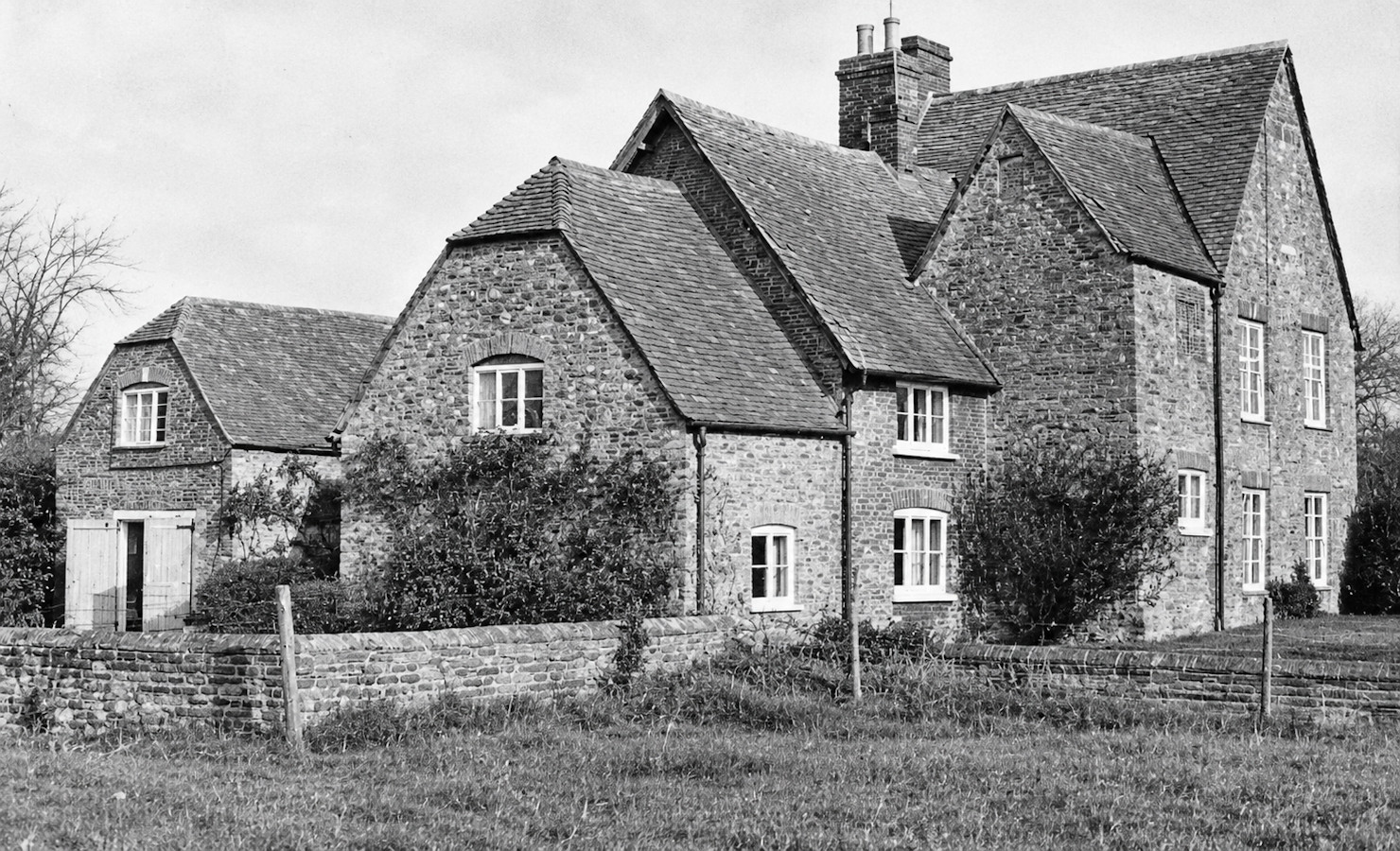
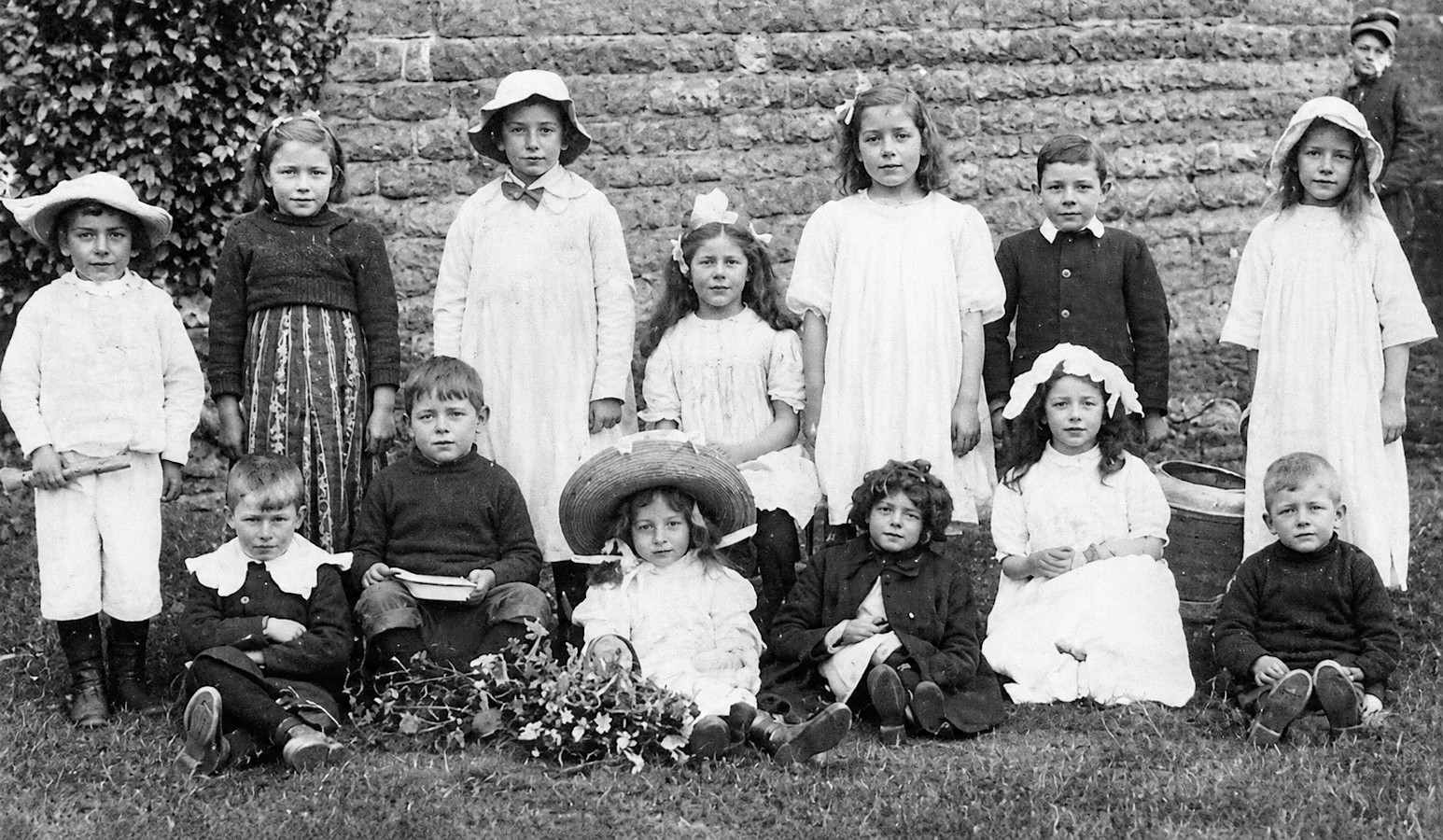
Goosey Church of England School (originally founded as a National School built in 1853) was an elementary school catering for up to 54 children from Goosey and surrounding villages. It permanently closed its doors to them in 1967.
The following article by Jim Brown was published in the ‘Nostalgia Corner’ of the Faringdon Folly newspaper in April 2001:
Jim Brown’s Schooldays
ONE of my school friends has sent a school photo with me on and challenged me to use it for Nostalgia Comer and write about our school days. The photo is of some of the children attending Goosey Church of England School in 1945, standing in the small playground under the infant classroom window.
Goosey School a two classroom building at the top of Goosey Green. It drew children from Challow Station, Baulking Grange, Stanford Park, Goosey Wick and Goosey. When I first started aged four, taken to school in a seat fixed on the carrier of my mothers sit up and beg bike, there were only about 20 odd children on roll. When the first flood of evacuees came in 1939 the number doubled, chaos! Poor Mrs Chapman, the head teacher, was not used to the attitude of some of the visitors, swearing, dirty habits and bad behaviour had never been known in her school. Mrs Chapman had taught both my mother and father, a fact she used to remind me of often if I was slow in learning something. She should have retired in 1939 but was asked to carry on because of the war, in fact she finally retired the same term that I left school, summer 1946. I was given the job to write to as many old pupils as could be traced for contributions for a leaving present, a cheque for £45 was presented to her, I thought the sum a fortune.
Mrs Chapman was a strict disciplinarian, I have memories of her walking quietly between our iron framed desks with her ‘cane’ an 18 ebony ruler held up her back. Any lack of concentration on your part brought the ruler down on the top of the desk causing the ink well to leap out of its hole. Talking of those ink wells it always seemed to be my job, last day of term to go round the classroom with a white enamel pail and collect them up, out to the wash room, stone sink with one cold tap, and wash them out, first day of next term mix up the ink powder with water in a jug and fill up all the ink wells in the ‘big’ room desks.
I think I might have been a bit of a favourite because I also had the job when free school milk was introduced, to go every morning across the Green to Ben Bookers, Yew Tree Farm, with a large white enamel jug and collect the fresh milk and fill all the mugs for break time. Free school dinners was another milestone. And another regular job for me, carry in the metal containers that held the food brought from Wantage, then help Mrs Pendell the infant teacher dish it all out on plates. When Mrs Pendell left the school for a while I had to do it all on my own, in fact for the last two or three terms of my schooling I was to all intents and purposes the infant teacher, helping the very small ones with their three Rs.
I was not a perfect pupil, I had my share of the ruler across the palms of my hands, though never across the desk with trousers down, that was only for very serious cases, thankfully a very infrequent punishment. With my friend Percy Raynor we were often in trouble, following the hunt if they were around, going moorhens nesting in the dinner hour, falling in and coming back to school wet through, and if the threshing tackle was at Mr Pepler’s farm next door to the school, and if the ricks were well down killing the rats and mice was far more important than lessons. As for the pre D-day army manoeuvres in the area, that would be a chapter on its own.
Yes, my school days were a wonderful time, even though Mrs Chapman often used to terrify me and the tears would flow, I have a lot to thank her for. Thank you Heather for reminding me of those early times, and for the photo. In my reminiscing I often wish that my children and grandchildren could have had the fun at school that I had, but then they have learnt far far more than I ever did.
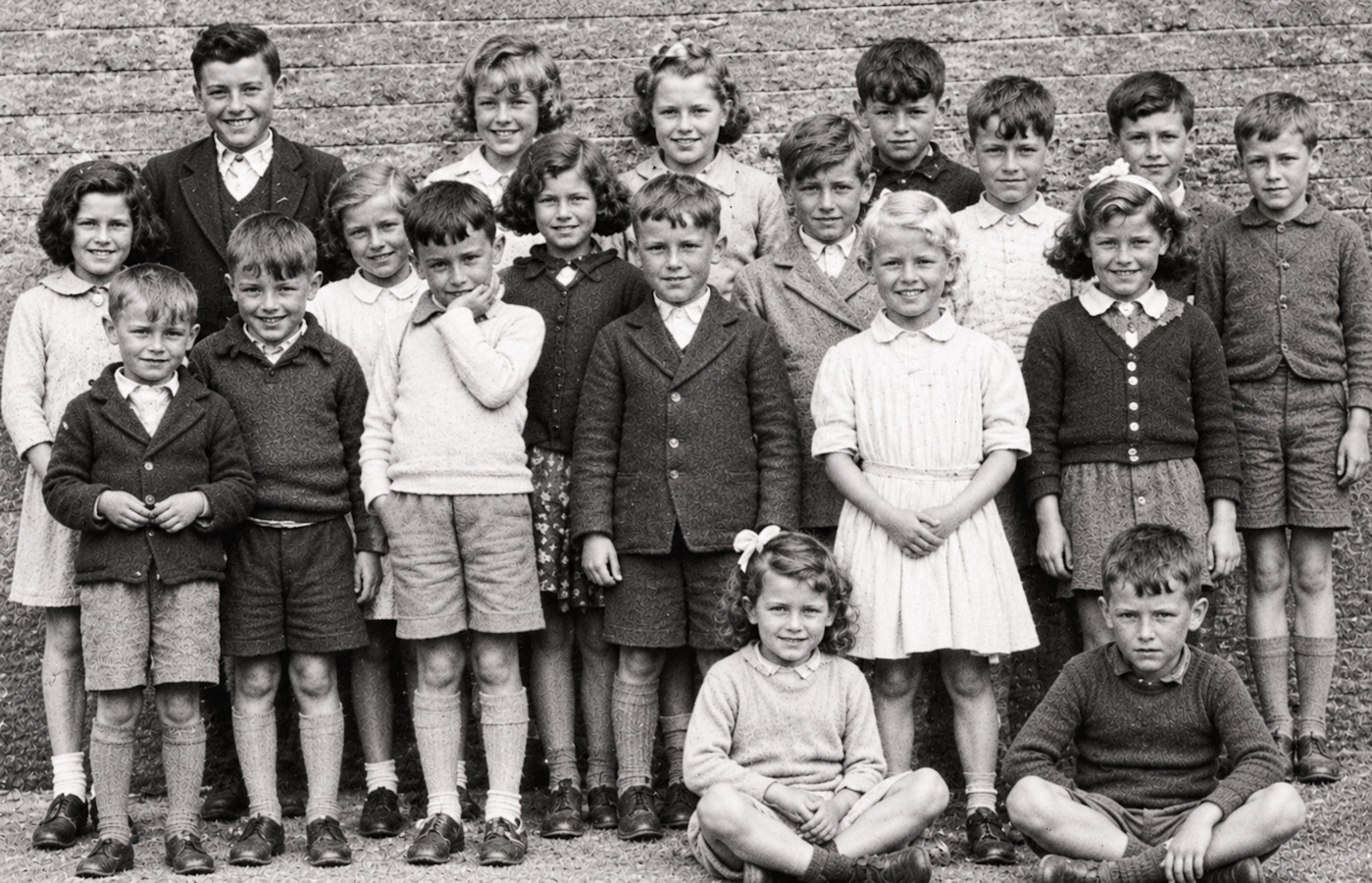
Left to right from rear: yours truly, Challow Station; the next two girls the first called Pat were evacuees from Radipole Weymouth, they lived with the Stanleys at Challow; Alan Belcher, Challow; Eric Jacobee, another evacuee living with the Comleys at the Leather Bottle pub Challow; Brian Dawson, Goosey.
Next row: Judith Hobbs, Goosey; Vera Belcher, Challow; Valerie?, may have been another evacuee she lived with the Ballard family Goosey; Philip Clements, Millaway Farm Goosey; Derek Maundrell, Pound Farm Goosey; Colin Smith, Prince of Wales pub Challow (one too many!).
Front row: Tony Adey, Challow; Michael Stanley, Challow; Leslie Dawson, Goosey; Donald Brown, Challow; Pat Belcher, Challow; Heather Shewry, Challow.
Seated: Christine Belcher, Challow; Norman Ballard, Goosey.
More… Oxfordshire Villages website: http://www.oxfordshirevillages.co.uk/valevillages/goosey.html
References:
- Photo and text scanned directly from The Changing Faces of Faringdon and Surrounding Villages – Book 2 p95-96 by Rosemary Church, Jim Brown, Millie Bryan and Beryl Newman. Robert Boyd Publications 2001.
- Berkshire Family History – https://berksfhs.org/goosey
- Public Houses, Inns & Taverns of Berkshire – https://pubwiki.co.uk/Berkshire/